
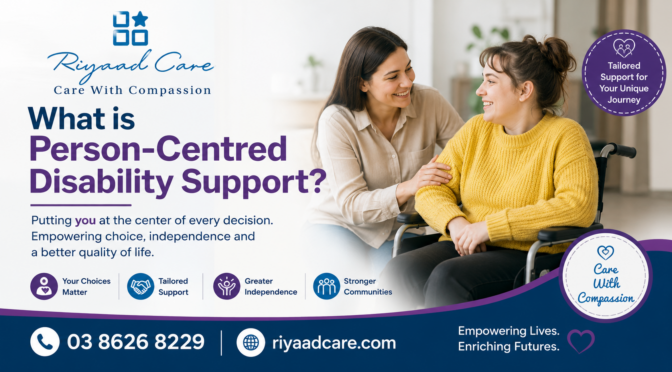
Finding disability support is not only about receiving assistance with daily activities. It is about ensuring support services are tailored to an individual’s unique needs, preferences, goals, and aspirations. Today, families and participants across Melbourne increasingly seek personalised approaches that promote independence, dignity, and long-term wellbeing. This is where What is Person-Centred Disability Support becomes an important topic for participants and families navigating disability care options.
At Riyaad Care, we understand that every individual has different goals and life experiences. Effective disability support should adapt to the person—not require the person to adapt to the service.
What is Person-Centred Disability Support? (Quick Answer)
What is Person-Centred Disability Support refers to an approach where disability services are designed around an individual’s goals, preferences, abilities, and choices rather than using a one-size-fits-all model. This support method promotes independence, choice, community participation, and improved wellbeing through tailored support plans that reflect each participant’s unique lifestyle needs.
Bookmark Description:
“Learn what person-centred disability support means and discover how personalised care approaches help individuals achieve independence, wellbeing, and life goals. Explore trusted disability support guidance from Riyaad Care in Melbourne, VIC.”
Understanding Person-Centred Disability Support
Direct Answer:
Person-Centred Disability Support Melbourne focuses on understanding individuals beyond their disability. Instead of providing standard support packages, services are tailored according to participant goals, preferences, strengths, routines, and desired outcomes.
Under this approach, support workers and providers work collaboratively with participants and families to create meaningful support experiences.
Key focus areas often include:
- Daily living assistance
- Personal care support
- Social inclusion
- Skill-building activities
- Community participation
- Independent living goals
- Education support
- Emotional wellbeing
- Mobility assistance
Summary:
Person-centred care recognises that individuals should have control over how they live their lives.
Core Principles of Person-Centred Care
Experienced disability support providers commonly follow several guiding principles.
1. Choice and Control
Participants decide:
- What support they receive
- When they receive support
- Who provides support
- How services are delivered
For example:
A participant interested in developing cooking skills may receive assistance through cooking activities rather than general support sessions.
2. Individual Goal Planning
Goals may include:
- Learning public transport skills
- Improving communication abilities
- Increasing social confidence
- Finding employment opportunities
- Living more independently
3. Respect and Dignity
Quality Disability Support Services Melbourne place strong emphasis on:
- Personal preferences
- Cultural values
- Privacy
- Independence
4. Community Inclusion
Participants are encouraged to engage with:
- Community events
- Social groups
- Recreational activities
- Education opportunities
- Volunteer programs
Summary:
Person-centred support creates meaningful experiences rather than simply completing tasks.
How Person-Centred Support Works Under NDIS
Many families asking about NDIS Disability Support Melbourne often wonder how person-centred approaches fit within NDIS frameworks.
The National Disability Insurance Scheme focuses heavily on participant goals and independence.
Support plans commonly include:
Capacity Building Supports
Examples:
- Developing life skills
- Employment preparation
- Communication support
- Improved daily living abilities
Core Supports
Examples:
- Personal care assistance
- Household tasks
- Community access
- Transport assistance
Social Participation Supports
Examples:
- Group activities
- Recreational programs
- Community engagement
A participant wanting greater independence might receive support focused on travel training, shopping skills, and social interaction development.
Summary:
The NDIS framework strongly aligns with person-centred care principles.
Benefits of Personalised Disability Support
Choosing Personalised Disability Support Melbourne offers practical benefits beyond standard care models.
Improved Independence
Participants gain opportunities to:
- Build confidence
- Learn practical skills
- Manage daily activities independently
Better Emotional Wellbeing
When people feel heard and respected, they often experience:
- Reduced stress
- Greater confidence
- Improved self-esteem
Greater Community Participation
Participation may involve:
- Sporting activities
- Local community groups
- Educational opportunities
- Social programs
Stronger Relationships
Participants often develop:
- Friendships
- Family connections
- Support networks
Improved Goal Achievement
Support becomes directly linked to individual outcomes rather than routine care activities.
Real-Life Examples of Person-Centred Support
Example 1
A young adult participant in Melbourne wanted greater independence using public transport.
Instead of only offering transport assistance, support workers helped:
- Understand bus routes
- Practice travel safety
- Build confidence gradually
Result:
The participant eventually travelled independently.
Example 2
A participant experiencing social isolation expressed interest in art.
Support planning focused on:
- Community art programs
- Social groups
- Creative workshops
Result:
The participant formed friendships and improved confidence.
These practical outcomes demonstrate how Disability Care Melbourne becomes more meaningful when support reflects personal goals.
Common Misconceptions About Disability Support Services
Misconception 1:
All disability support services are identical.
Reality:
Different providers use different support approaches.
Misconception 2:
Participants cannot change support plans.
Reality:
Support plans evolve according to changing goals and needs.
Misconception 3:
Support only involves physical care.
Reality:
Quality NDIS Support Services Melbourne may include:
- Life skills development
- Community access
- Social inclusion
- Employment support
- Emotional wellbeing assistance
How Families Choose the Right Disability Support Provider
When selecting a Disability Support Provider Melbourne, consider:
Experience
Ask:
- Does the provider understand individual needs?
- Do they have practical disability support experience?
Flexibility
Look for providers offering:
- Tailored support plans
- Flexible schedules
- Goal-focused services
Communication
Effective providers:
- Listen carefully
- Involve families
- Encourage participant input
Community Knowledge
Local providers often understand:
- Melbourne support services
- Community programs
- Local participation opportunities
Melbourne Disability Support Considerations
Families in Melbourne, VIC often seek support that connects participants with local opportunities.
Examples include:
- Community activity programs
- Education pathways
- Employment support
- Recreational services
- Social engagement activities
Local understanding matters because support requirements can differ between communities and participant lifestyles.
For individuals searching for Disability Assistance Melbourne, personalised support can significantly improve daily experiences and long-term outcomes.
Frequently Asked Questions
What is person-centred disability support?
Person-centred disability support focuses on tailoring services according to an individual’s goals, choices, preferences, and unique needs.
Why is person-centred care important?
It helps individuals gain independence, improve wellbeing, and participate more actively in their communities.
How does person-centred support benefit participants?
Benefits include greater confidence, improved social inclusion, better goal achievement, and stronger independence.
Is person-centred support part of NDIS?
Yes. NDIS planning strongly supports person-centred approaches through goal-focused support funding.
Can support plans be customised?
Yes. Plans should evolve according to changing needs and participant goals.
How do families choose a disability support provider?
Families should consider provider experience, flexibility, communication practices, and personalised care approaches.
Key Takeaways
- What is Person-Centred Disability Support focuses on individual goals and preferences.
- Participants have greater choice and control.
- Support services become more meaningful and effective.
- Community participation and independence improve.
- Personalised approaches often lead to better wellbeing outcomes.
Why Families Trust Riyaad Care
At Riyaad Care, we believe quality support begins by understanding the individual behind the support plan.
We work closely with participants and families across Melbourne, VIC to create personalised support pathways focused on independence, confidence, wellbeing, and meaningful community participation.
Contact Us
Looking for trusted and personalised disability support services?Phone: 03 8626 8229
Speak with our team today to discover support tailored to your goals and lifestyle.


